Posts

The Prague Orgy

Image
  When I first visited Prague in November 1995, the ghostly presence of the Cold War seemed to linger in the wintry setting, the quiet streets after dark, and the strange shuffling, secretive habits of the owner of the apartment I was renting. And yet it was also very much apart from a decade earlier, when Philip Roth published The Prague Orgy (1985) and the Cold War was in the middle of a charged resurgence. I recently re-read this book and felt not nostalgia but horror. Imagine an era of secret police, disappearances, authoritarian power and personal fear. Yes, it hasn’t entirely gone away from the world at large (Russia, China, Iran) – even if Wenceslas Square is now a place of tourism and high street shopping. In this novella, Roth continues with the character of Nathan Zuckerman, a successful America novelist and protagonist of three earlier works of fiction ( The Ghost Writer [1979], Zuckerman Unbound [1981], The Anatomy Lesson [1984]). The setting is 1976. Zuckerman agre...
Disgrace

Image
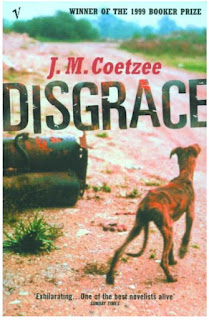
I have had ' Disgrace' on my shelf for a while now, and at last, I felt ready to engage with it. Coetzee is a much-revered writer, so the fault is all mine – the only other Coetzee novel I have read is the experimental ' Diary of a Bad Year' (2007). ' Bad Year'  involves a 72-year-old South African writer who falls for a younger woman. ' Disgrace' begins with a similar premise – 52-year-old Professor David Lurie moves from a falling for a woman whose love he pays for (Soraya) to an even less appropriate target for his affections: a student in his Romantic literature class. Melanie is at first rather passive in the affair, but a menacing boyfriend and a protective, prayerful father put an end to things and Professor Lurie is in trouble with the university authorities. Were he willing to make a public apology, the matter might be put behind him; but he is not and his days of teaching are over. At this point the novel moves from the diary of a bad man to...

Under the Jaguar Sun

Image
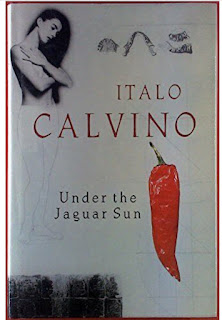
Under the Jaguar Sun was published posthumously in 1986 in Italian and 1988 in English, with Calvino passing in 1985, aged 62. Ether Calvino’s note relays that Calvino began the book in 1972, with only three of the stories finished (published here). A few days before he fell ill, Calvino had written about the idea of the framing device (here the five senses) – ‘We consider poetic a production in which each individual experience acquires prominence through its detachment from the general continuum, while it retains a kind of glint of that unlimited vastness’ (p.86). How I would like to hear more! The title story ‘Under the Jaguar Sun’ is set in Oaxaca, Mexico (a city I once visited and loved). The narrator and his wife Olivia are visiting Mexico and while their love life is muted, their sense of taste is a sensual delight. The narrator speaks of his desire for oneness: ‘Our subjective, individual selves … find their amplification and completion only in the unity of the couple’. Yet in t...

Zone of Interest

Image
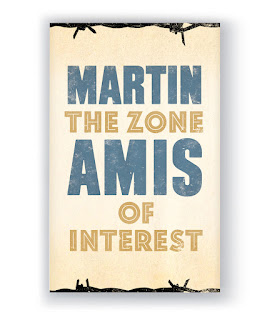
 I was reading Martin Amis’s latest book Inside Story (see April’s post) when I realised the degree of interest Amis has for the darkest days of the Nazi regime. The dedication to Zone of Interest includes Primo Levi, Paul Celan, his mother-in-law, daughters and his wife – mentioned after the phrase ‘to the countless significant Jews and quarter-Jews and half-Jews in my past and present’. This close affiliation must be what gave Amis the confidence, and permission, to write about the Holocaust, and to do so from a number of perspectives.  While it is seemingly obvious in the subheadings, I read some pages of the first chapter before I realised that the novel was changing viewpoints. The main protagonist is ‘Golo’ Thomsen, an intellectual and privileged SS Officer, a skirt-chaser and ultimately a Romantic who turns against the regime. He survives the war largely due to an uncle who is an out-an-out supporter of Hitler and high up in the ranks. Thomsen nevertheless informs on a...

Cosmopolis

Image
  The novel is like a two-act play, opening in the year 2000, on ‘a day in April’. It anticipates the Global Financial Crisis more than responding directly to 9/11 (the novel was published in 2003) in that the critique is of western capitalism, rather than American foreign policy. This said, the simplified world-view of Eric Packer is part of the wider geopolitical and economic problem. In Part One, we meet Packer – a man of twenty-eight who appears to be at the height of his powers as an uber-rich investor with a forty-eight room apartment and an heiress wife he hardly seems to know. Packer’s power is pharaoh-like – outside of his house, he is enthroned in a stretch limousine, where employees and doctors are summoned. Packer asks childlike questions that could be profound were he interested in the answers; rather he is a man of rat-like intelligence that so far has allowed him to crush and win. Now doubt, for some reason, has entered his world and in the course of a day, he unra...

On Chesil Beach

Image
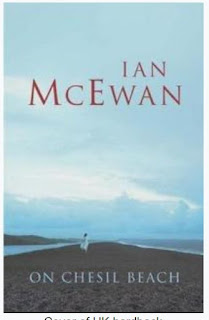
  Ian McEwan’s micro novel On Chesil Beach deserves at least a micro review. It is July 1962, and Edward and Florence are on their honeymoon. More precisely, it is their wedding night, and the clock is ticking. Edward has been holding out for this moment throughout the year of their engagement. With typical irony, McEwan writes that ‘Edward’s single most important contribution to the wedding arrangement was to refrain, for over a week’. During this time, he has been ‘chaste with himself,’ since he wishes to be ‘in top form for his bride’ (p.20). That is one side of the matter. Whether it is the expected restraint of the times, ignorance, fear or asexuality, Florence is rather the opposite, dreading Edward’s touch as a wifely duty she would rather not perform at all. There are five chapters in this short novel, and it isn’t until the end of Chapter Three that the near consummation sees Florence fleeing the room and sprinting out into the darkness, down to Chesil Beach where she hid...

Sorry For Your Troubles

Image
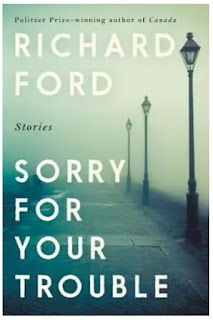
The title ‘Sorry for Your Troubles’ suggests something Irish, and indeed it seems as though Richard Ford wishes the reader to follow him over the seas and back (though I, for one, feel he is strongest when the work is grounded among ordinary men and women of the United States). While I'd rather avoid sounding like a critic who likes the old stuff, the rough-and-ready nature of various strugglers in Rock Springs is hard to beat. Here there are lawyers and successful retirees (though, of course, troubles don’t stop with a solid safety-net, and lonely hearts are everywhere).  The first of the stories takes place in New Orleans. A middle-aged, married man Sandy McGuiness is out with business associates when he spies a slender woman in a brown dress, who returns his gaze with something like recognition. Ford switches to the past – thirty-five years earlier, when Sandy and Barbara (the slender woman in a brown dress) traveled together to Iceland. They’d bunked down in a rustic fishing h...