Posts

Inside Story

Image
For a time I couldn't decide whether Martin Amis's  Inside Story was a chore to read, or a pleasure (it was both) -- but I persevered. Ultimately I would say it was a pleasure. Or perhaps, in keeping with the style of the novel, I should say something like this: “Geoff Gates, a reader who prided himself on some discernment, had decided that Inside Story was a novel worth bothering with. ”  The Wrap: You can read the way that the novel is equivocally praised in The Guardian by Tim Adams here:  https://www.theguardian.com/books/2020/sep/13/inside-story-by-martin-amis-review-too-clever-by-half.  Or roasted indulgently in the New York Times by Parul Sehgal here: https://www.nytimes.com/2020/10/20/books/review-martin-amis-inside-story.html Here's some of my own thoughts on the book.  Observation One: ‘The Preludial’ (adjective for ‘Prelude?’) has the cute direct address of playful postmodernism (‘Welcome! Do step on in – this is a pleasure and a privilege’ [opening...
I'm Not Scared

Image
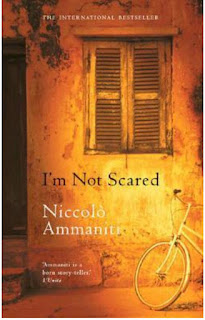
I’m not Scared was a great success for Niccolò Ammaniti, published in 2001 when the author was aged thirty-five. The story is narrated by Michele Amitrano, a curious child living in a dull, hot hamlet where nothing much happens. Exactly where and when Michele is when he recalls the events of that summer is unclear, but some time has passed (‘The wheat was high that year …’[p.1]; ‘ That morning we went off on our bikes’ [p.5]). The narrative opens with the children riding out beyond the boundaries set by their parents. As a storm approaches, they find an abandoned farmhouse, and Michele is dared to enter (an act of selflessness to save the dignity of a girl in the gang). As Michele finds a hidden underground recess, he thinks he has found a corpse. He doesn’t tell the others and returns home with the first terrible secret. Ammaniti’s portrait of boyhood is from a bygone era, when fathers wielded an authority stemming from an accepted level of violence. Beyond the household, worldly i...

A Room with a View

Image
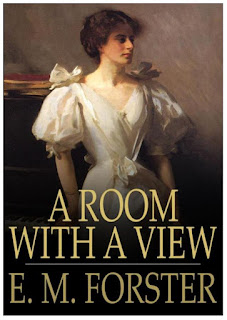
\ If you are old enough you will remember the 1985 film -- a huge success, with eight Academy Awards nominations, and so on, and Helen Bonham Carter in her breakthrough role. I'd like to see it again, especially now that I've finally got around to reading the book. There may be little point in writing about a novel published in 1908 with all the critical studies over the decades. However, reading the novel at the start of 2022 has left me with a few thoughts to share.  The first is the simple pleasure of reading this novel after some time among the serious (necessarily so) books of contemporary literary writers. I refer in particular to my last two entries: Don Delillo’s Zero K (2016) and Richard Flanagan’s The Living Sea of Waking Dreams (2020). E. M. Forster's  A Room with a View operates very much like a two act romantic drama, with Act 1 set in Florence, and Act 2 set in Surrey (the setting is a house known as ‘Windy Corner’). A limited set of characters is introduced...

The Living Sea of Waking Dreams

Image
Serious writers have a way of getting under your skin, and like Don Delillo’s Zero K,   this novel takes a hard look at the way things are and doesn’t let the reader off the hook for a moment. If the satirical fable of Zero K centres on sleep as the answer to the woes of the world, Flanagan makes disappearance – of species, of body, of meaning – the heart of his message.   The Living Sea of Waking Dreams has a simple plot, one immediately relatable: three adult siblings gather around their dying mother and struggle to let her go. The protagonist, Anna, should hold the sensible middle ground once treatments to prolong Francie’s life become inhumane, but she is under the spell of the Terzo, a wealth manager who believes that money and influence can buy life. Anna’s other brother, Tommy, is a sympathetically drawn character -- a struggling artist, stuttering and sentimental. A dead fourth sibling casts a dark shadow: Ronnie, a teenage suicide, likely the result of his interac...

Zero K

Image
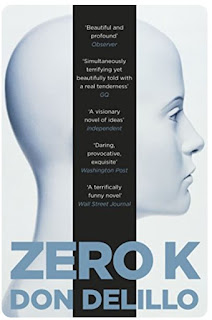
Some of my students bought me this book, knowing that I am a fan of Don Delillo, having heard me talk about End Zone and White Noise (see earlier reviews). Like these earlier novels, Zero K is set in end-times for the human race (while the race continues on as ever). Not nuclear catastrophe, however, but an overreliance on technology, growing autocracy, and climate change as background. The immediate story is how to escape via a fairly extreme version of the underground bunker. By choosing the time of their suspension via cryogenics, the ultra-rich hope to weather the storm of the coming apocalypse and wake to a better world. This all seems  like madness to the storyteller, Jeffrey, whose step-mother Artis and billionaire father Ross Lockhart seek to take this bizarre leap of faith (involving, as it does, the preservation of the body and brain as separate commodities). The first line of the novel sets the theme in motion: “Everybody wants to own the end of the world” (p.3). ...

The Dickens Boy

Image
  Tom Keneally is a most prolific writer, with 34 published novels, 15 works of significant non-fiction, and two children’s collections. Almost Dickensian in output. His 1982 Booker-prize winning Schindler's Ark is his most famous book internationally and the basis of the film Schindler's List (1993) directed by Stephen Spielberg. Keneally, now aged 86, has had a long career and knows a thing or two about writing. The Dickens Boy is a richly imagined novel about the real-life journey to Australia by Edward Bulwer Lytton Dickens, known to everyone as Plorn, Dicken’s tenth child. Plorn is a likeable young Englishman, only sixteen when the story begins. His first stay in Australia is at a station named Eli Elwah, and he only lasts 12 hours. Young Dickens is angered by the station manager’s rude inquiries and innuendo about his father’s personal life, and goes so far as to threaten a ‘trial of honour’ to which the station manager replies, ‘Can you believe this bloke? (p.17). Stir...

Quichotte

Image
The premise of this novel appeals to fans of metafiction and Salman Rushdie. A spy thriller writer, Sam DuChamp, turns his attention to a more literary story—a picaresque novel about Ismail Smile — a traveling salesman of pharmaceutical products. Smile falls in love with a TV-host star, and travels across America on quest to win her love. Meanwhile, Smile conjures up a son, Sancho, who begins to have a life of his own, slowly moving from the imaginary world to the world of flesh and blood.  Like a 19th century novel, each chapter begins with a helpful summary as subtitle (e.g. Chapter One: Quichotte, an old man, falls in love, embarks on a quest & becomes a father). Chapter Two introduces the author of the character Quichotte – Sam DuChamp, and so the layering of the fictional world begins. So far, so good. When introducing DuChamp, however, the narrator highlights DuChamp’s fictional status (“we will call him Brother” p.21). Then there is the unsettling instability of the text...